
The Death of Employee Engagement (And What Actually Motivates People Now)
Engagement isn't enough. Leaders have to find new ways to motivate the modern workforce.
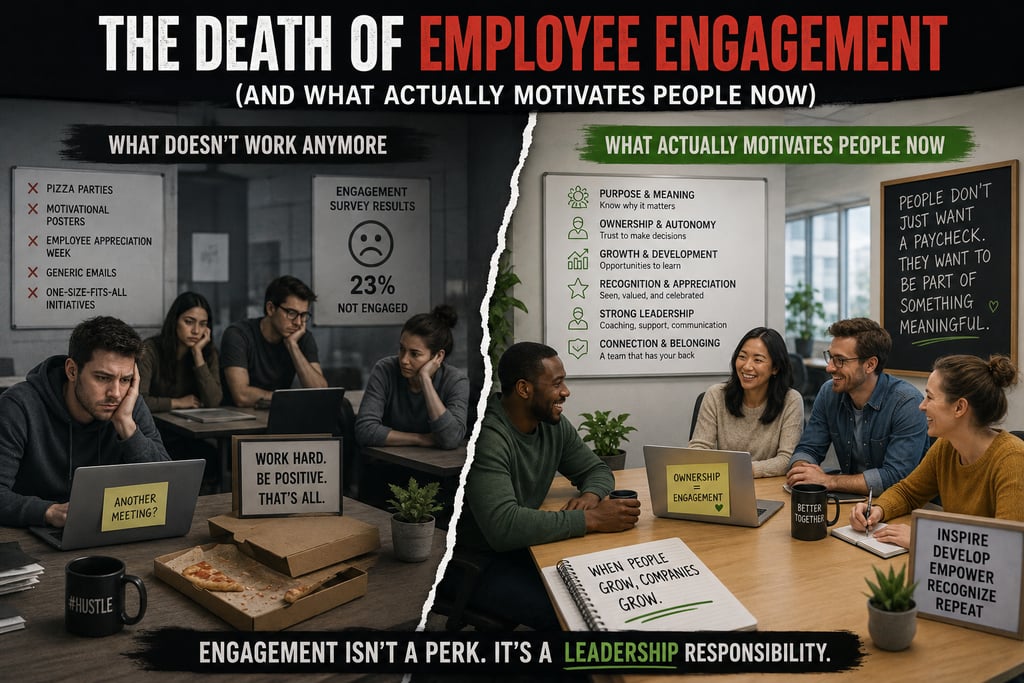
Most employee engagement initiatives fail because they misunderstand what people actually want. Organizations throw pizza parties, motivational posters, branded water bottles, employee appreciation weeks, and generic “culture initiatives” at teams while ignoring the things employees truly care about.
Then leadership wonders why morale keeps dropping. Employee engagement isn't dying because people care less about work. It's dying because employees have become better at recognizing superficial leadership. People don't want corporate entertainment.
They want meaning. They want growth. They want something worth taking ownership in. They want to feel like their work matters.
Employees Don't Want to Be Managed Like Children
Modern employees want autonomy. Not constant oversight. They want leaders who trust them. Coach them. Develop them and include them in meaningful conversations. One of the fastest ways to destroy engagement is treating employees like task-completing machines instead of capable professionals.
Micromanagement kills motivation faster than almost anything else.
Purpose Matters More Than Perks
Perks create temporary excitement. Purpose creates long-term commitment. People are willing to work hard when they understand:
Why the work matters
How they contribute
What impact they are making
How they are growing personally and professionally
The problem is many organizations communicate tasks all day long but rarely communicate purpose. Employees don't just want instructions. They want connection.
Recognition Is Broken in Most Organizations
Most companies only recognize outcomes. Very few recognize effort, growth, leadership, creativity, problem-solving, or consistency. Employees notice this quickly, especially high performers. People don't disengage overnight. They slowly disconnect after feeling invisible for too long.
And once emotional disengagement happens, performance usually follows.
The Real Drivers of Engagement
After working with leaders and teams across multiple industries, I've noticed the same patterns over and over again.
The most engaged employees typically have:
Clear expectations
Strong leadership communication
Opportunities for growth
Autonomy
Psychological safety
Recognition
A sense of purpose
Managers who actually care about development
Notice what isn't on that list. Free snacks, company swag, or mandatory fun.
Engagement Is Built Through Leadership Behavior
Culture is not built during company retreats.
It's built during:
Difficult conversations
One-on-one meetings
Feedback sessions
Recognition moments
How leaders respond under pressure
How employees are treated during stressful periods
Employees watch leadership behavior far more than they listen to leadership messaging.
What Actually Motivates People Today
Modern motivation is deeply connected to ownership.
People want to:
Solve meaningful problems
Contribute ideas
Learn new skills
Feel trusted
See progress
Have influence
Be respected
The best leaders create environments where employees feel psychologically invested in the mission instead of emotionally detached from it.
Engagement Is Not a Department
One of the biggest mistakes organizations make is treating employee engagement like an HR initiative. Engagement is a leadership responsibility. Every manager influences engagement every single day.
Through:
Communication
Feedback
Recognition
Accountability
Empathy
Clarity
Consistency
The Future of Leadership
The organizations that win over the next decade will not be the ones with the most perks.
They will be the organizations that create:
Meaningful work
Healthy leadership
Growth opportunities
Trust
Clear communication
Emotional connection
Purpose-driven cultures
Because people don't stay loyal to free lunches. They stay loyal to environments where they feel valued, challenged, heard, and developed.
That's what modern engagement actually looks like.