
People Don't want a Boss anymore, they want a Coach
People don't want top down, military style autocratic managers, they want coaches.
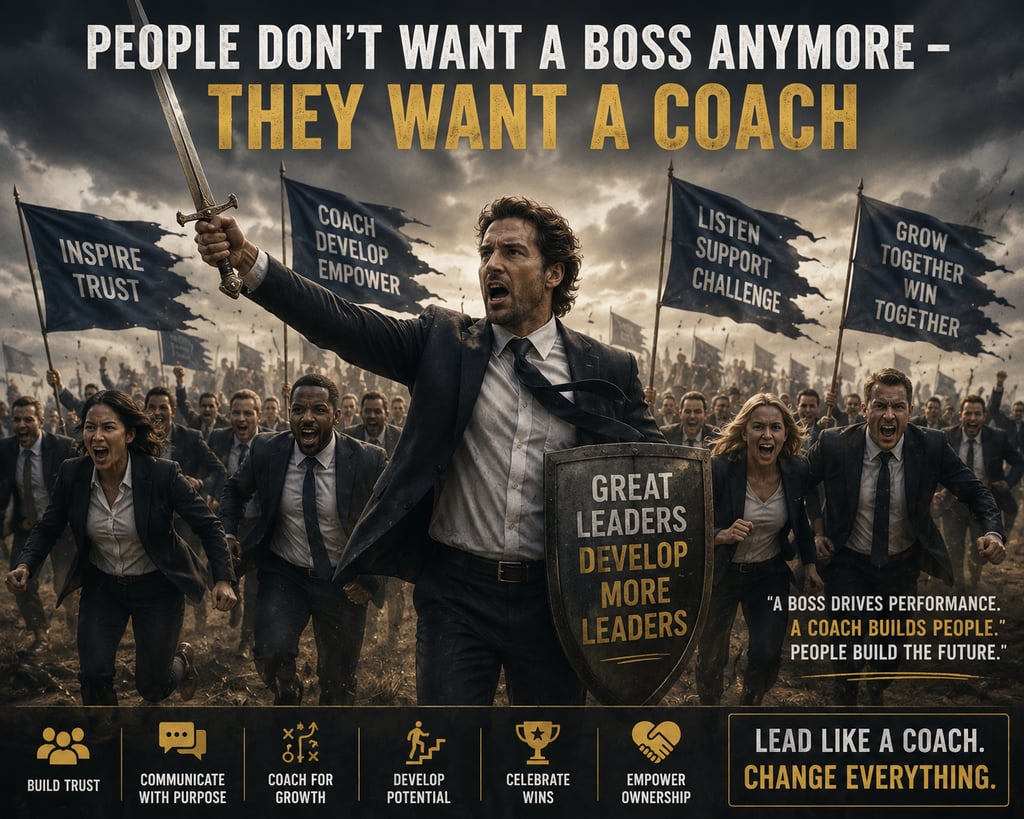
The workplace has changed. But many leadership styles haven't. For decades, organizations operated under top down, autocratic leadership. It ran like a military organization. Managers gave instructions. Employees followed orders. Leadership prioritized compliance as the top attribute of a "good" employee. Like a good soldier.
But today's workforce wants something different. They don't want to be good little soldiers marching from meeting to meeting. They are looking for an inspiring leader. Someone who will invest in them and coach them to their personal best.
Management and Coaching Are Not the Same Thing
A manager focuses on:
Processes
Tasks
Deadlines
Oversight
Efficiency
A coach focuses on:
Growth
Development
Confidence
Accountability
Long-term performance
The problem is many organizations still promote people into leadership roles without teaching them how to coach human beings. Someone becomes a manager because they were technically good at their job... so let's promote them into leading people... I'm sure they will figure it out!
That's a disaster waiting to happen. Being good at your job, does not make you a great coach or a leader... at least not right away. Most of us leaders have been put in this position early in our career. We've had the experience of being thrown against the preverbal "leadership wall" and seeing if we would stick. The problem there is I have seen great employees, great people, get promoted and fail because either A. They were never right for a leadership position. Or B. They were never properly trained. That's a stupid way to lose good people.
To be a great leader/coach you have to learn to:
Have difficult conversations
Develop talent
Build trust
Give feedback
Resolve conflict
Inspire ownership
Create psychological safety
And that's where the disconnect begins. Those skills are learned and often modeled for a leader, by another great leader. Either that OR they painfully learned those skills out of necessity.
Employees Want Development, Not Control
One of the biggest workplace shifts happening right now is this: Employees are no longer satisfied with simply completing tasks. They want growth. They want mentorship. They want support. They want feedback that helps them improve instead of criticism that shuts them down.
People are asking questions like:
“Is my leader invested in my development?” and "Do they care about me?".
They don't want a micromanager and they don't want to be under their boss's thumb!
Coaching Creates Ownership
The best leaders don't create dependency. They create confidence. They coach to competence.
Command-and-control leadership often creates:
Fear of mistakes
Low innovation
Passive employees
Constant approval-seeking
Minimal ownership
It creates a culture of Fear. Fear to fail and fear to try. It's much easier to keep your head down, your mouth shut, and slide under the radar than get your wrist slapped for taking a risk.
However, coaching leadership styles creates:
Initiative
Confidence
Accountability
Problem-solving
Collaboration
Growth
People perform differently when they feel trusted and they know they can trust you.
Accountability and Coaching Work Together
Many leaders think coaching means lowering standards to meet people where they are at. It doesn't. In fact, the best coaches often create the highest standards and an accountability culture. Because coaching is not about avoiding difficult conversations. It's about helping people improve through clarity, support, and ownership. Employees are far more likely to accept accountability from leaders they trust.
Modern Employees Can Spot Fake Leadership Quickly
Today's workforce values authenticity.
Employees can immediately tell when leaders:
Don't listen
Only communicate during problems
Avoid feedback
Focus only on metrics
Treat employees as replaceable
Plain don't care
Trust is built through consistency, great communication, integrity, and honesty. Not on titles.
The Coaches People Remember
Everyone has had at least one person in their life that stood out as "the leader or Coach" they think of when someone brings up great leadership. Not just because their name was on their check or on the side of the building, but because of their character.
People remember coaches because:
Impactful conversations they had
Encouragement they received
Mentorship on a daily basis
Belief in them when they didn't in themselves
Growth opportunities they provided
Support during difficult moments
Great coaches change careers and change people. Sometimes they change lives. Coaches require a level of courage to act boldly and do what is right, even when it's not easy.
To quote Braveheart:
"Men don't follow titles, they follow courage..."
Coaching Is the Future of Leadership
The future belongs to leaders who can:
Build trust
Develop people
Create ownership
Communicate clearly
Coach through challenges
Balance empathy with accountability
The organizations that adapt to this shift will attract and retain stronger talent. The organizations that don't will continue struggling with turnover, disengagement, burnout, and low trust.
Because at the end of the day… People don't quit companies nearly as often as they quit leadership that makes them feel unseen, unheard, unsupported, or stagnant.
And the best leaders understand something many organizations still don't:
Employees don't just want direction anymore.
They want courageous coaches as their leaders.