
Extreme Ownership and Radical Accountability: The Leadership Standard That Changes Everything
We are walking through the difference between Extreme Ownership and Radical Accountability inside your organization and team.
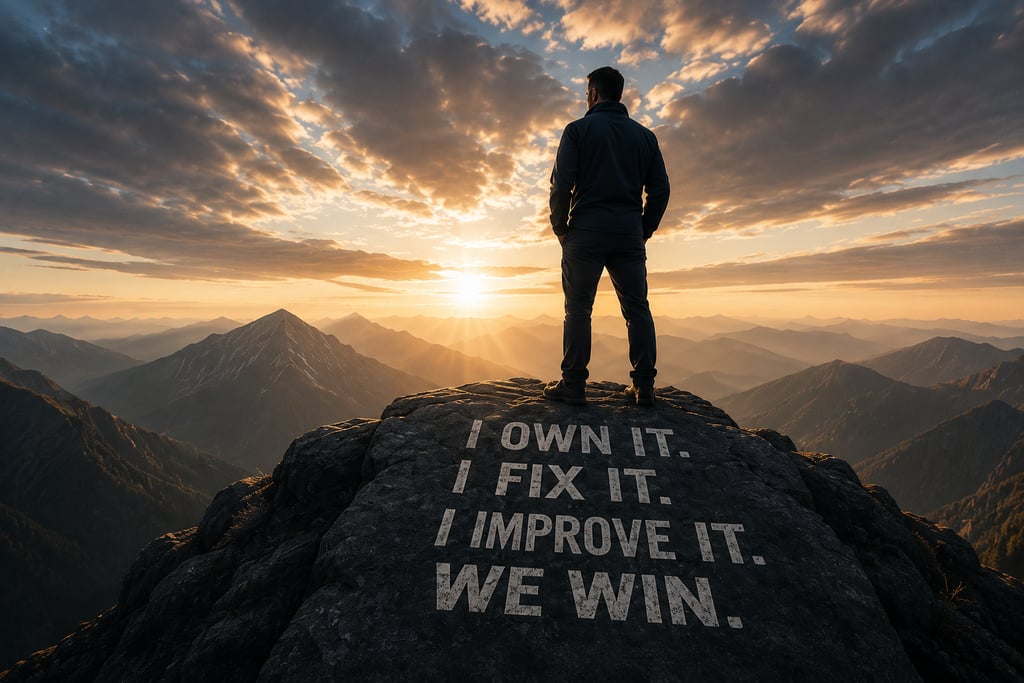
Every organization wants high-performing teams. Every executive wants employees who take ownership. Every manager wants people who solve problems instead of creating them, obviously!
But here's the uncomfortable truth.
Most organizations don't have an employee accountability problem. They have a leadership accountability problem. Before accountability ever reaches the front line, it begins with the person leading the team. Great leaders don't point fingers of blame. They dole out "Thumbs-ups" to people who deserve it.
They don't ask, "Who's responsible for this?" They ask, "What could I have done differently?"
Have you ever heard, "When you point the finger... three fingers point right back at you?" That's leadership.
At the end of the day... Who hired your people? Who kept them on the team? Who coached them? Who monitored their progress? Who held them accountable?
Taking Extreme Ownership is realizing that the buck stops here.
Leadership Begins in the Mirror
One of the easiest things to do as a leader, or human for that matter, is blame external circumstances.
The economy. The competition. The budget. Corporate's stupid rules. HR getting in the way. The younger generation just doesn't know how to work. The older generation is just coasting at this point. Remote workers are making sandwiches and flipping laundry instead of making calls. Hybrid work just isn't as effective. Our customers just don't get it. We can't find the right people.
I've heard every excuse imaginable.
The problem is this:
Every minute spent looking for someone else to blame is a minute you're not improving your own leadership.
Extreme Ownership doesn't mean everything is your fault. It means everything under your leadership is your responsibility. That's a powerful distinction.
Radical Accountability Is About Standards
Accountability has developed a bad reputation. Employees hear the word and immediately think, "I'm about to get in trouble."
That isn't accountability. That's punishment. Real accountability is about commitment. It's creating an environment where everyone—including the leader—is held to a consistent standard.
Radical accountability means saying, "I own my commitments.", "I own my communication.", "I own my mistakes.", and "I own the culture my decisions create."
Imagine how different organizations would look if every leader started there.
The Culture You Tolerate Is the Culture You Create
One of my favorite leadership questions is simple: "What are you allowing to continue?"
Late meetings. Poor communication. Office politics. Low effort. Negative attitudes. Missed deadlines. Lack of collaboration. If it continues, employees assume it's acceptable.
Culture isn't built by mission statements hanging on the wall. Culture is built by what leaders consistently reinforce—and what they consistently ignore. Every conversation you avoid eventually becomes a culture problem.
The Best Leaders Own the Bad Before They Celebrate the Good
Average leaders are quick to accept credit. Great leaders are quick to accept responsibility. When projects succeed, they celebrate the team. When projects fail, they examine their contribution to the failure first. Not because they're scared to hold their team accountable, but because they hold themselves accountable as the leader!
Because they're confident enough to learn from their mistakes. Blaming employees might protect your ego. Owning your leadership improves your organization and team.
If you learn from a failure and change, then it wasn't a failure at all, but a learning lesson that you needed.
Lessons always have a cost.
Accountability Starts With Clarity
Many leaders become frustrated with employees because expectations were never clearly defined. You can't hold people accountable for standards they don't understand.
Before asking:
"Why didn't they do it?"
Ask:
"Did I clearly communicate what success looked like?"
Did you explain expectations?
Did you define priorities?
Did you provide the necessary resources?
Did you remove obstacles?
Did you check for understanding?
Leadership isn't simply giving instructions. It's creating clarity.
Excuses Are... Contagious
Excuse are like __________. Everyone has one (Finish that ancient proverb on your own time).
Here's something I've noticed after years of working with leadership teams.
Employees almost always mirror their leaders.
If leaders make excuses... Employees make excuses. If leaders avoid difficult conversations... Employees avoid accountability. If leaders blame other departments... Employees blame other departments. If leaders own mistakes... Employees become more willing to own theirs.
Leadership behavior spreads faster than any policy ever can. People don't simply hear what leaders say. They copy what leaders do.
Radical Accountability Creates Loyalty and Trust
That might sound backward. Many people assume accountability creates fear. In reality, poor accountability creates fear. Healthy accountability creates trust. When leaders admit mistakes first... Employees feel safe admitting theirs. When leaders ask for feedback... Employees become more open to coaching. When leaders model humility... Employees stop hiding problems.
Problems don't destroy organizations. Hidden problems do. Loyal and high-trust teams are often the most accountable teams. Because everyone knows the goal isn't blame. The goal is improvement.
The Questions Great Leaders Ask Themselves
They ask:
Did I communicate clearly?
Did I coach instead of criticize?
Did I recognize great work?
Did I remove unnecessary obstacles?
Did I listen more than I talked?
Did I make someone on my team better this week?
Did I model the behavior I expect?
That's radical accountability.
Ownership Doesn't Mean Doing Everything Yourself
This is where many leaders get confused. Extreme Ownership is not about carrying every burden. It's not about becoming a martyr. It's not about solving every problem personally. It's about owning the outcome while empowering others to own their role. Great leaders delegate tasks. They never delegate responsibility. They create ownership at every level.
Accountability Without Coaching Creates Fear
Many organizations focus on accountability but ignore development. That's backwards. People grow when accountability and coaching work together. The strongest organizations combine both. High standards. High support. Clear expectations. Consistent coaching. Mutual ownership.
Leadership Isn't About Being Right
It's about getting better. One of the best leaders I ever worked with had a simple habit. Whenever something went wrong, he would ask: "What did I miss?", not, "Who messed this up?"
That single question changed the entire tone of every conversation. People stopped defending themselves. They started solving problems. That's what ownership looks like.
The Bottom Line
Every organization says they want accountability. But accountability doesn't begin with policies. It doesn't begin with performance reviews. It doesn't begin with disciplinary action. It begins with leadership. When leaders own mistakes... Teams become more honest. When leaders communicate clearly... Teams become more confident. When leaders coach consistently... Teams become more capable. When leaders stop blaming and start improving... Organizations transform.
Extreme Ownership and Radical Accountability aren't leadership buzzwords. They're leadership disciplines. And in today's workplace, they may be the single greatest competitive advantage an organization can build. Because the best leaders don't create followers.
They create more leaders who take ownership.